Gem guide
Ceylon Ruby: Colour, Quality and the Pink Sapphire Line
Ceylon ruby is ruby from Sri Lanka: usually a bright, slightly pinkish red that sparkles more than it smoulders, found in the same gravels as the island's sapphires.
What is a Ceylon ruby?
Ruby is the red variety of corundum, the same mineral as sapphire. Chromium gives it its colour, and like sapphire it rates 9 on the Mohs scale, so it is tough enough for rings worn every day. Rubies from Sri Lanka have been traded for centuries, and "Ceylon ruby" is still used to describe them by origin.
Sri Lanka is better known for sapphires than rubies, and fine Ceylon rubies are genuinely scarce. That scarcity, and their particular colour, is what makes them interesting to collectors.
The colour of Sri Lankan ruby
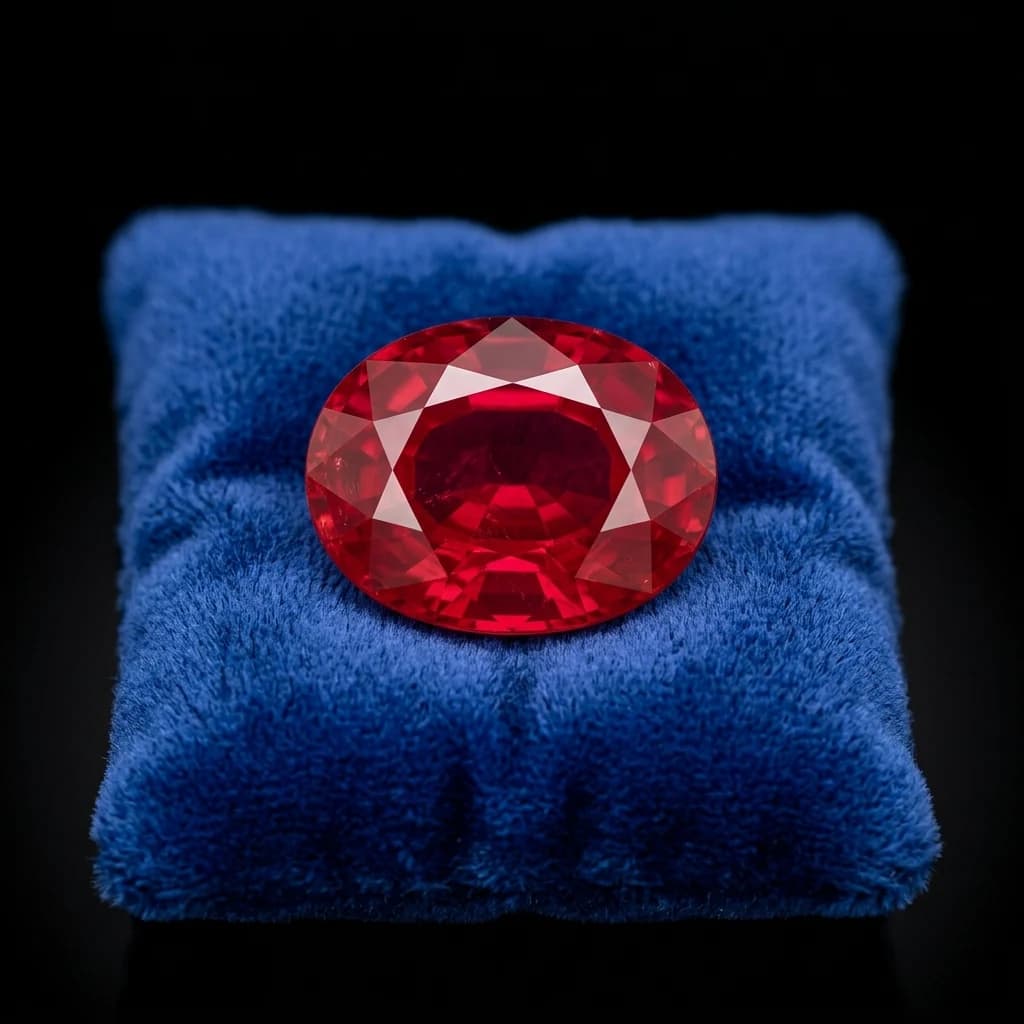
Rubies from Sri Lanka tend to be lighter in tone than the deep reds associated with some other sources, with a bright, slightly pinkish or raspberry red. Their relatively low iron content lets them glow strongly, especially in daylight, so they look lively rather than dark. The most valued stones show a strong, pure red with only a hint of pink or purple.
Ruby or pink sapphire?
Because ruby and pink sapphire are the same mineral, the line between them is a matter of colour judgement. A stone that one dealer calls a light ruby may be sold by another as a strong pink sapphire. Laboratories draw the line in slightly different places, and the name has a big effect on price.
The practical advice is to buy the colour you love, not the name. If a stone is described as ruby, a report from an independent laboratory confirms that the colour is strong enough to earn it. For the wider differences between the two gems, read sapphire vs ruby: what's the difference?
How to judge quality
Colour dominates value: look for strong saturation and even colour without dark or washed-out areas.
Clarity. Rubies are rarely flawless. Fine silk and small crystals are normal and can even help prove a stone is natural. Avoid stones with large open fractures, which weaken the gem.
Cut and size. A good cut shows colour evenly across the face. Rubies over two or three carats are much rarer than smaller stones, and prices climb steeply with size.
Treatments to ask about
Most rubies are heated to improve colour and clarity, and this is widely accepted. More serious treatments exist: some low-grade rubies are filled with lead glass, producing a "composite" stone that looks attractive but is far less durable and worth a fraction of a natural ruby. It can be damaged by jewellery cleaning chemicals or a jeweller's torch. Always ask how a ruby has been treated and ask for a laboratory report. See what buyers should know about heat treatment.
Ruby's lookalike: spinel
For centuries, red spinel was mistaken for ruby, and some famous crown jewels once thought to be rubies turned out to be spinel. Today spinel is valued in its own right. Our Ceylon spinel guide explains how to tell them apart.
Where it is found
Ceylon rubies come from the same gem gravels as sapphires, mostly in the Ratnapura region, where miners wash illam gravel by hand and sort red corundum alongside blue and fancy sapphires. Read about gem mining around Ratnapura.
Buying a Ceylon ruby
See the 4.12 ct natural ruby in our collection, or shop natural Ceylon rubies as new stones are added. We will send extra photos, a video and any laboratory report before you order.